
Ice Buildup on Windows: A Room-by-Room Diagnostic Checklist
Direct answer:
Map where and when the ice appears before changing humidity or replacing a window. A whole-home pattern usually points to moisture and ventilation; one unusually cold opening points to airflow, sealing, installation, or product condition.
Alongside the specific checks in Ice Buildup on Windows: A Room-by-Room Diagnostic Checklist, review ice on the inside of windows and compare that guidance with measured conditions in this home.

Why the frost pattern matters
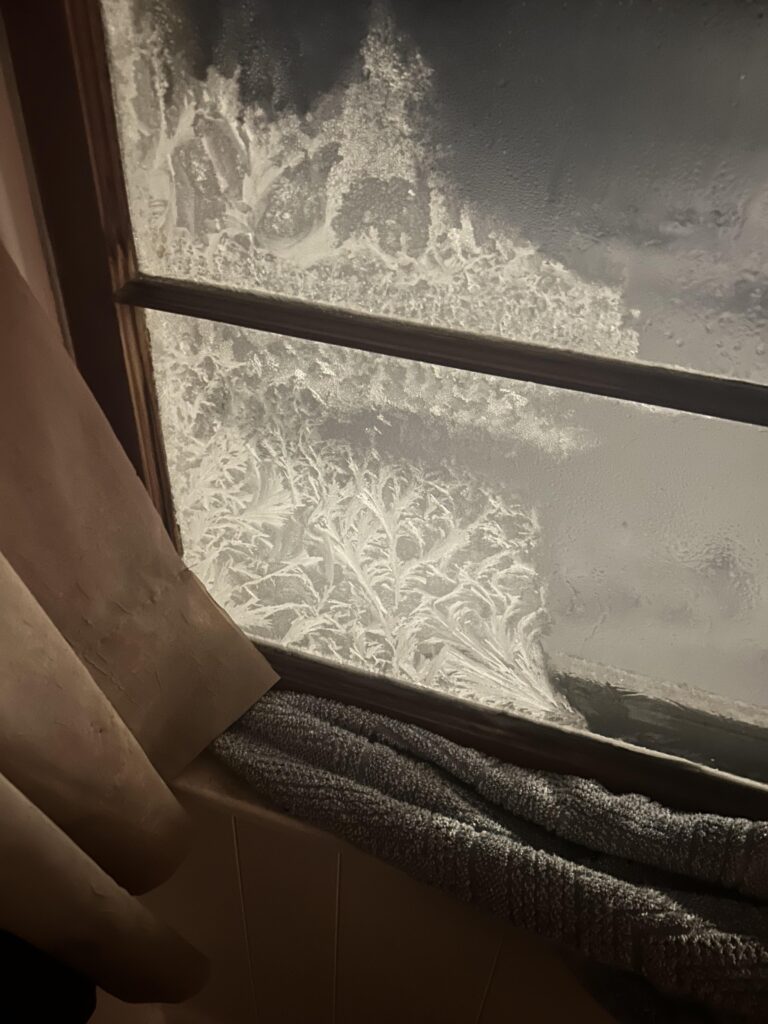
Start with the pattern, not the purchase decision. Window ice begins as a surface-temperature problem. Indoor air carries water vapour; when that air meets a surface below its dew point, liquid condensation forms. If the surface is below freezing, the water becomes frost or ice. Natural Resources Canada notes that colder weather and higher indoor humidity both increase the risk.
Health Canada recommends controlling indoor dampness and uses 30 to 50 percent relative humidity as broad household guidance. That range is not a frost guarantee: during severe cold, some window and wall assemblies need a lower indoor level. Natural Resources Canada publishes temperature-dependent examples, so weather and whole-window performance must stay in the diagnosis.
Evidence to collect:
– Same frost band on several bedrooms.
– One sash colder than matching units.
Ice after showers, cooking, or laundry.
Meltwater staining below a single sill.
Within the diagnostic path for Ice Buildup on Windows: A Room-by-Room Diagnostic Checklist, use location and timing to distinguish how to prevent frost on inside of house windows from between-pane moisture, uncontrolled air leakage, or a room-specific airflow problem.
Practical response
- Photograph every affected window before sunrise.
- Record room humidity and outdoor temperature.
- Open blinds and confirm heat can reach the glass.
- Run source exhaust fans and check that they vent outdoors.
- Recheck the same windows during comparable weather.
Illustrative scenario
Illustrative scenario: frost appears on three upstairs bedroom windows but not downstairs. The units are the same age. Overnight bedroom doors stay closed and humidity rises while the furnace supply is partly blocked by furniture. That pattern supports an airflow and moisture test before a product claim.
What not to assume
Do not compare rooms with different temperatures, occupants, or covering positions as if they were controlled tests. A north bedroom with a closed door and heavy drapes is not equivalent to a sunny living room above a heat register.
When professional help makes sense
Call a building-envelope or window professional when one unit stays much colder, the frame is wet or distorted, there is air leakage at the rough opening, or finishes remain damp after the ice melts. For a review centred on Ice Buildup on Windows: A Room-by-Room Diagnostic Checklist, bring photos and measurements plus the reference steps for ice buildup on windows; the visit can then begin with evidence rather than a generic replacement assumption.
Frequently asked questions
Is window ice always a failed seal?
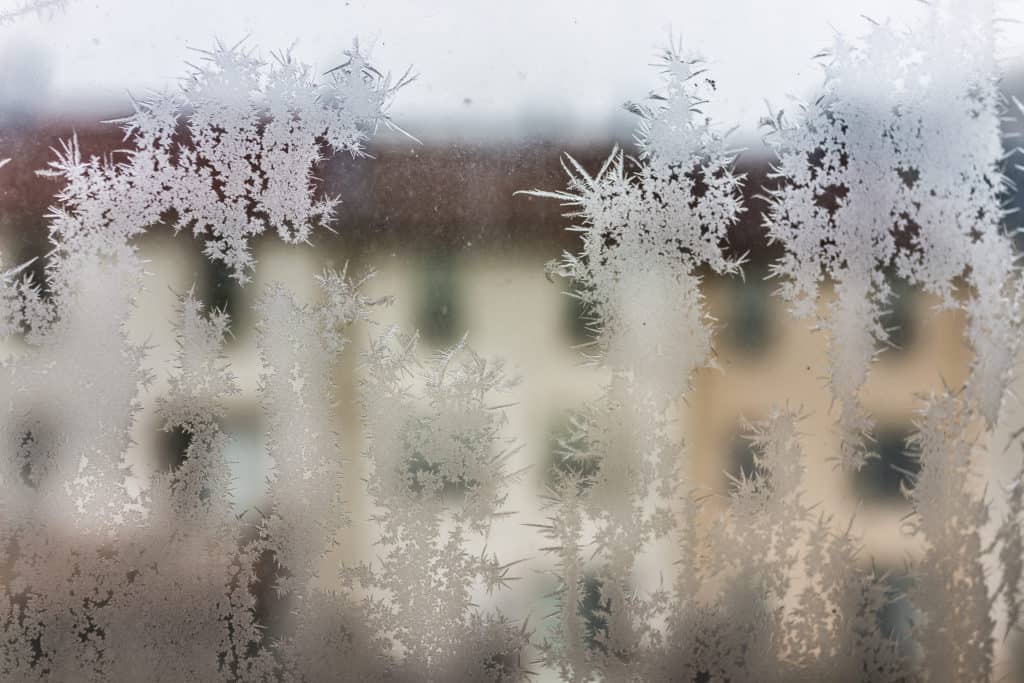
No. Room-side ice is usually frozen condensation. Moisture trapped between sealed panes is the stronger sign of an IGU seal problem.
Should every room use the same humidity target?
Use one measured whole-home baseline, then account for room temperature, occupancy, airflow, and exposure. Severe cold may require a lower winter setting.
Can I remove ice with hot water?
No. Rapid temperature change can stress glass and adds more water. Let the area warm gradually, collect meltwater, and correct the cause.
Suggested internal links
Why Is There Ice Inside My Windows?
Double Pane or Triple Pane Windows?
Authoritative sources
Natural Resources Canada – Condensation
Natural Resources Canada – Keeping the Heat In, Section 9
Health Canada – Guide to addressing moisture and mould indoors